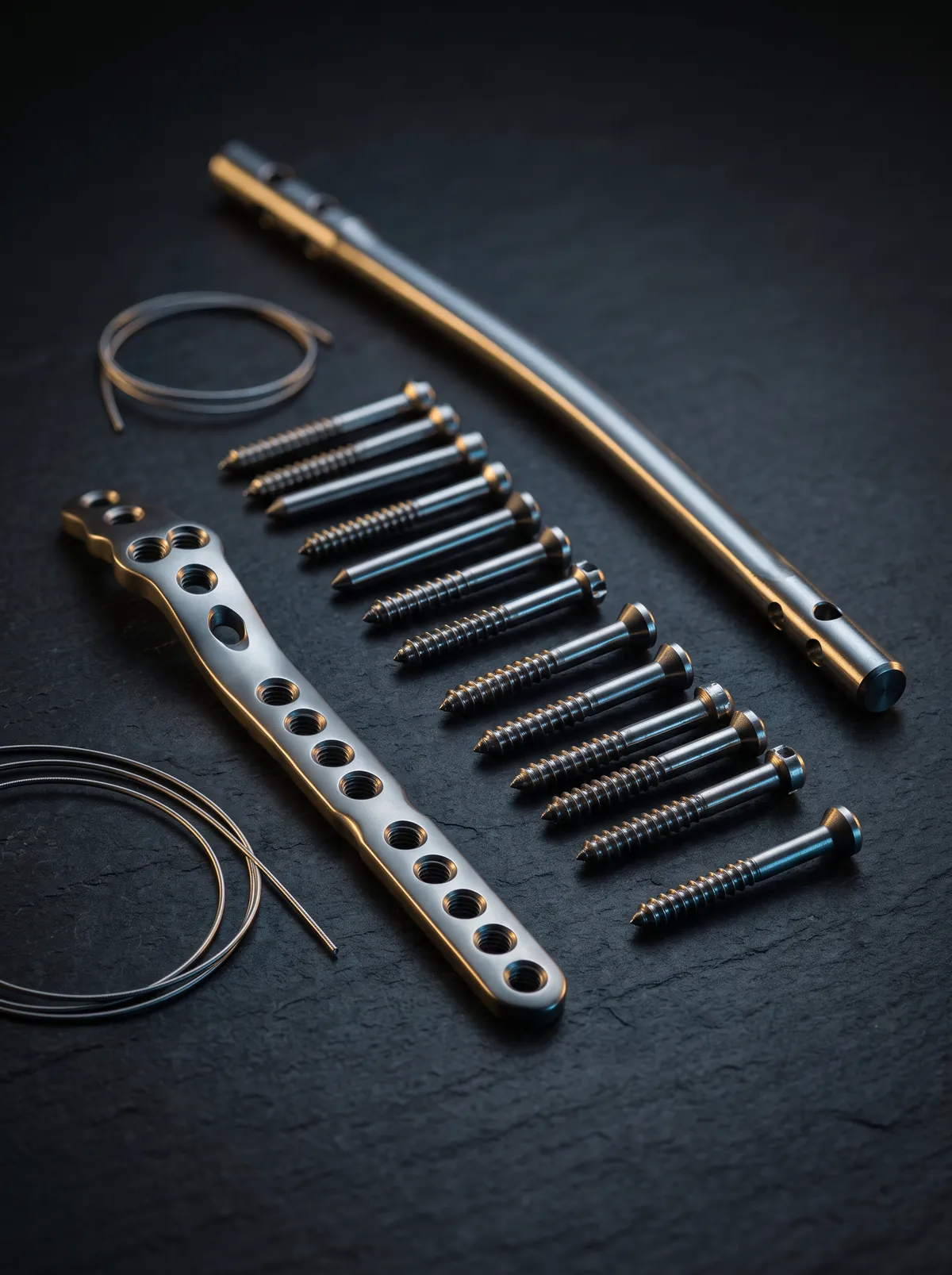
Screws Unit 1 →
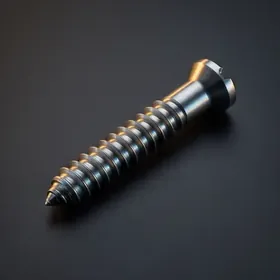
Cortical screw
Fine, shallow thread for dense outer bone. The workhorse sizes are 3.5 mm (small fragment) and 4.5 mm (large fragment); 2.7 mm and smaller for hand and foot.
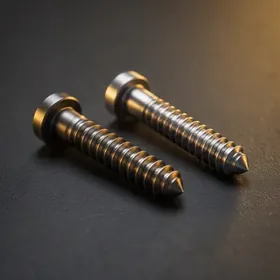
Cancellous screw
Coarse, deep thread to grip soft, spongy bone near joints, typically 4.0 mm and 6.5 mm. Partly threaded ones pull fragments together.
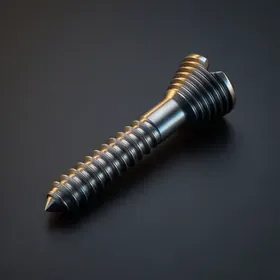
Locking screw
Its threaded head locks into a threaded plate hole, making a fixed-angle frame that doesn’t rely on the plate pressing on bone.
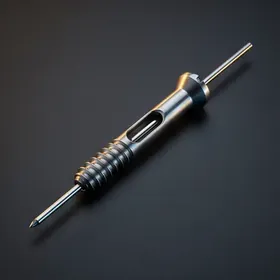
Cannulated screw
Hollow, so it slides over a guide wire placed first under X-ray. Common where position is critical, such as the hip.
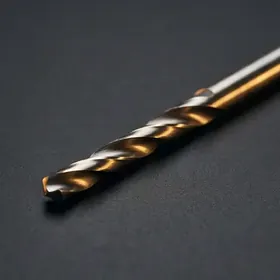
Lag technique
The screw grips only the far fragment, so tightening squeezes the break shut. Done with a partly threaded screw or an oversized near hole.
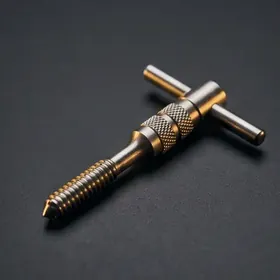
Self-tapping, self-drilling
Self-tapping cuts its own thread in a pre-drilled hole; self-drilling needs no hole at all (common in small bones).
Plates, nails, wires and frames Unit 2 →
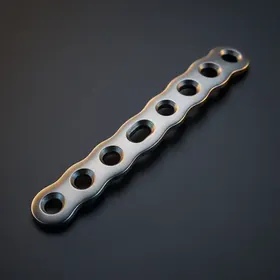
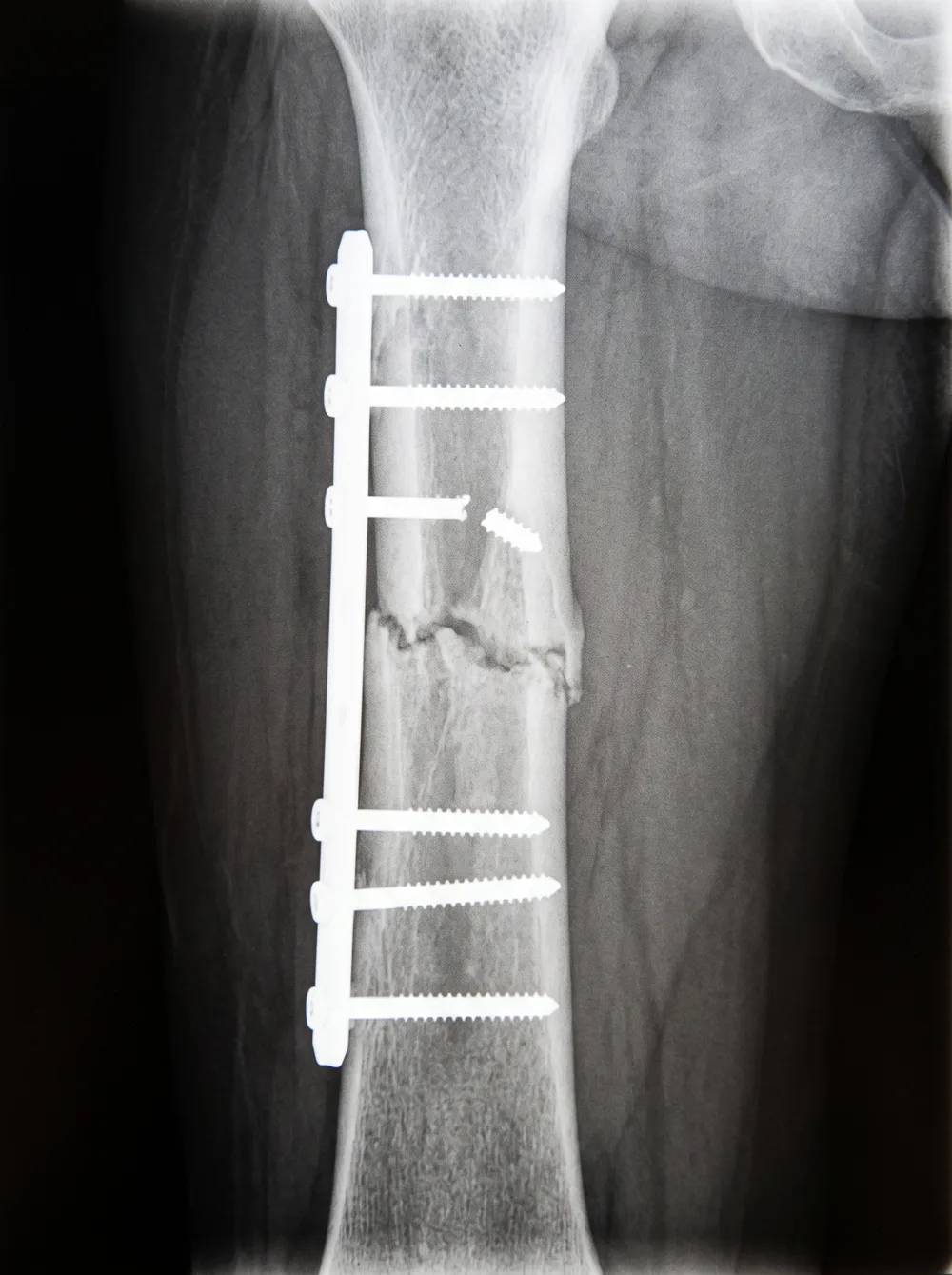
Compression plate
Sloped, oval holes: as the screw head slides down the slope it pushes the fragments together.
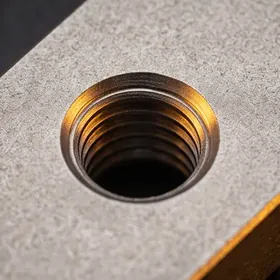
Locking compression plate
Combination holes: one side sloped for compression, the other threaded for locking screws, so the surgeon can choose per hole.
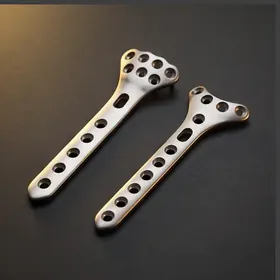
Anatomical plate
Pre-shaped for one region, such as the distal radius, proximal humerus or tibial plateau, with left and right versions.
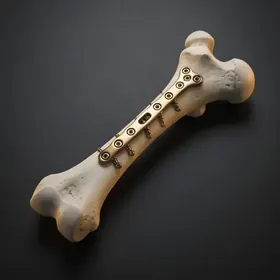
Thin and shapeable plates
One-third tubular plates for the fibula and ankle; reconstruction plates, notched to bend in more directions, for the pelvis.
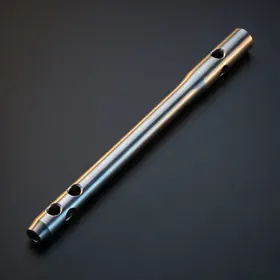
Intramedullary nail
A rod down the bone’s canal (femur, tibia, humerus), locked with screws through each end. It shares load with the bone.
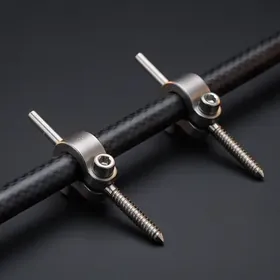
Wires and external fixators
K-wires: smooth pins for small fragments or temporary hold. Cerclage wire wraps the bone. External fixators hold pins from outside the skin.
What they’re made of Unit 4 →
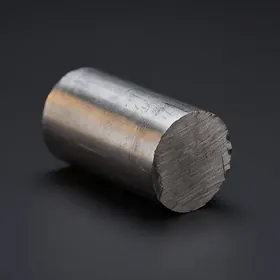
Stainless steel 316L
ASTM F138 · ISO 5832-1
Strong, ductile and lower cost. Contains nickel. About 200 GPa stiff.
Titanium alloy Ti-6Al-4V ELI
ASTM F136 · ISO 5832-3
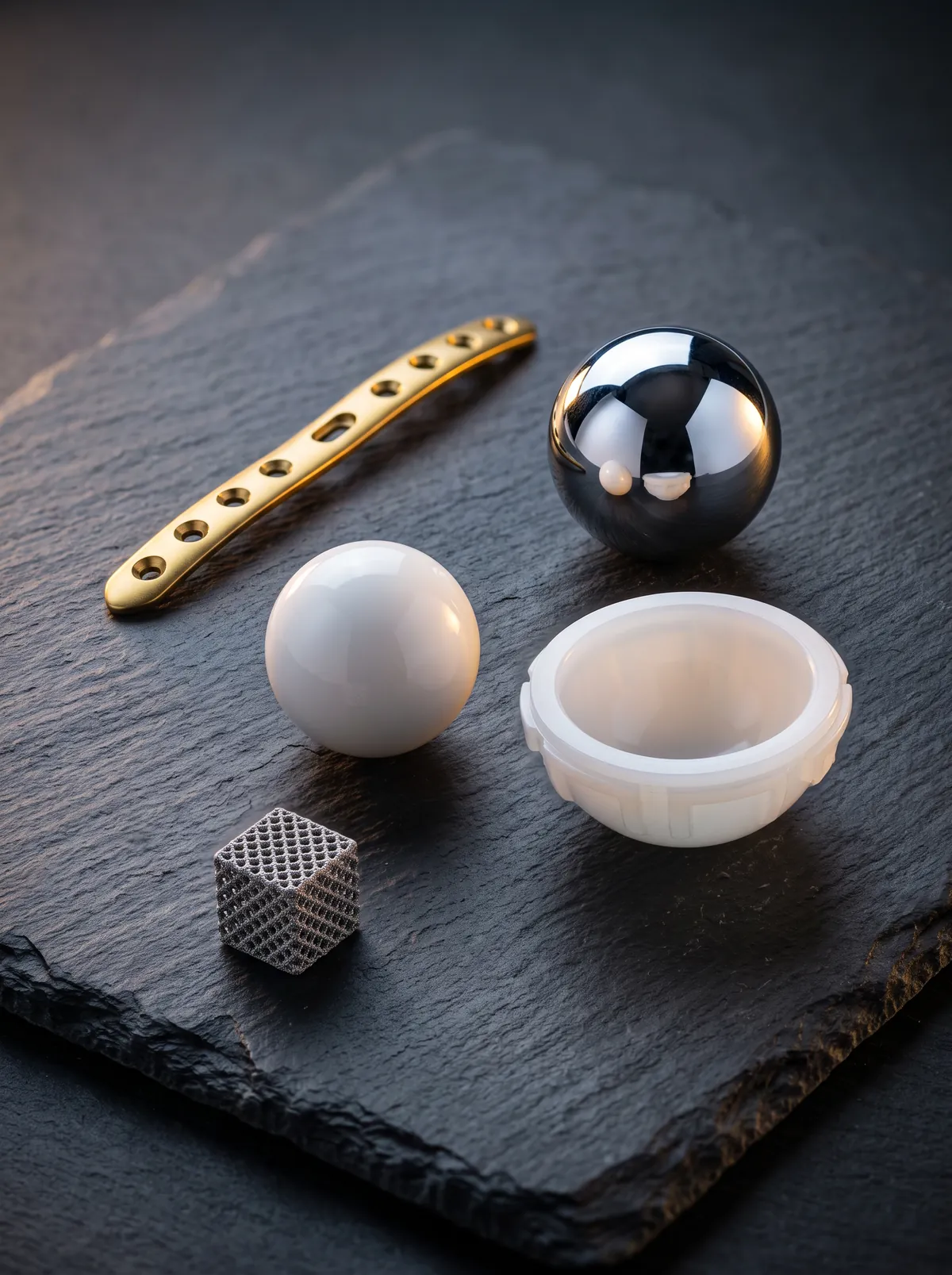
Light, very biocompatible, about half as stiff as steel (around 110 GPa). Anodised colours code the sizes.
Commercially pure titanium
ASTM F67 · ISO 5832-2
Softer; plates for small bones and the face.
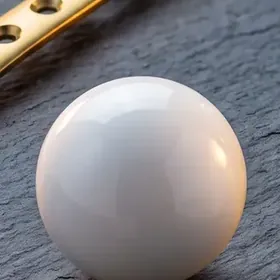
Cobalt-chrome (CoCrMo)
ASTM F75 (cast) · F1537 (wrought)
Very hard and wear-resistant: joint bearing surfaces.
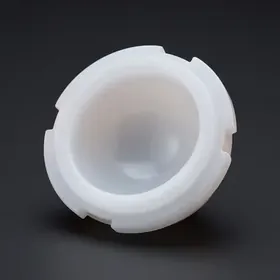
UHMWPE (polyethylene)
ASTM F648
The plastic bearing in hip and knee joints; cross-linked for wear.
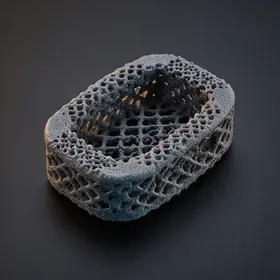
PEEK
ASTM F2026
A polymer close to bone’s stiffness and clear on X-ray: spinal cages.
For comparison, cortical bone is roughly 10–20 GPa stiff. The gap between implant and bone stiffness is why plate choice and screw placement matter.
Words you’ll hear on day one
510(k) / CE mark
The usual US clearance route, and the EU’s mark of conformity under the MDR.
Unit 12 →